Reviewing the Free Me Neither SVG Design for Embroidery
As a professional embroidery digitizer and product reviewer, I approach every new graphic with a specific question: will this actually stitch out well on fabric? When evaluating the FREE Me Neither Svg Design, my focus shifts immediately from screen to needle. This design is marketed as part of a Mom and Me SVG Bundle, intended for t-shirts, mugs, signs, and cards. However, for those of us in the Crafts industry creating tangible goods, an SVG file is merely a starting point. It requires translation into a viable machine embroidery design. After analyzing the lines, spacing, and overall composition, I see significant potential for this graphic in the personalized gift market, provided it is handled with technical precision.
First Impressions and Visual Personality
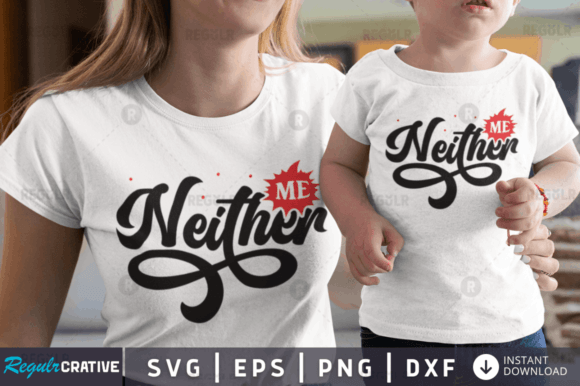
The "Me Neither" phrase carries a distinct mood. It is relatable, slightly self-deprecating, and inherently conversational. In the realm of Graphics meant for apparel, this text-based layout suggests a casual, comfortable aesthetic rather than formal wear. Visually, the design relies on typography to carry the message. For an embroidery project, this means the font choice and letter spacing are critical. The design feels like it belongs on a relaxed weekend sweatshirt or a canvas tote bag carried by a busy parent. It does not scream high-fashion; instead, it whispers connection and shared experience.
When I look at this file, I am assessing its suitability for a handmade product. The simplicity is its strength. Complex illustrations often get lost when scaled down for baby clothes or caps, but a bold typographic statement like "Me Neither" retains its legibility. This makes it an excellent candidate for custom apparel where readability at a distance matters. However, because it is text-heavy, the success of the final finished product depends entirely on how well the vector lines convert to stitch paths without becoming muddy or overly dense.
Real-World Application: The Matching Sweatshirt Set
To truly test the viability of the FREE Me Neither Svg Design, let’s consider a real-life scenario common among Etsy sellers and small shop owners. Imagine preparing a matching "Mom and Me" sweatshirt set for a holiday photoshoot or a boutique drop. The goal is to create a cohesive look that photographs well and feels premium to the touch.
In this context, I would utilize the FREE Me Neither Svg Design for the adult sweatshirt, perhaps placing it centered on the chest or arched across the yoke. For the child’s garment, you might use the complementary design from the bundle. As a sweatshirt embroidery specialist, I know that fleece fabrics can swallow fine details. Therefore, I would evaluate this design specifically for its ability to sit on top of the fabric nap. If the letters are too thin, they will disappear into the fleece. If they are properly proportioned, however, this design transforms a generic blank into a high-value personalized gift.
This specific application also tests the commercial viability for a craft business. Customers buying matching sets expect durability. They want to wash these items repeatedly without the threads fraying or the design distorting. By visualizing this end-use, we confirm that the FREE Me Neither Svg Design isn't just a cute digital download; it is a foundational asset for selling physical merchandise.
Technical Considerations for Stitching Success
While the design is versatile, it demands respect during the digitizing process. Not all embroidery files are created equal, and converting an SVG requires careful decision-making regarding stitch types. Here is where practical judgment comes into play:
- Satin Stitch vs. Fill Stitch: Depending on the thickness of the lettering in the FREE Me Neither Svg Design, you must decide between satin stitches and fill stitches. Satin stitches provide a smooth, shiny finish ideal for borders and medium-width text. However, if any part of the lettering exceeds 7mm or 8mm in width, a satin stitch will become unstable and prone to snagging. In those areas, a tatami or fill stitch is mandatory to maintain structural integrity.
- Stitch Density and Fabric Texture: When stitching on textured fabrics like pique knits or terry cloth, standard density settings may fail. You must increase the stitch density or add a topping to prevent the design from sinking. Conversely, on thin jersey knits used for baby embroidery, excessive density causes puckering. Always adjust your underlay based on the specific garment weight.
- Hoop Size and Placement: Verify your hoop size before beginning. Text designs can sometimes be wider than anticipated. If you are working on a curved surface like a cap, ensure the arch of the text matches the curve of the hat. Flat tote bag design placements are generally more forgiving, but center alignment is still crucial for a professional appearance.
- Small Details and Running Stitches: If the design includes decorative flourishes or tiny accent marks, check if they can be rendered as running stitches. These are lightweight and less likely to cause tension issues. Avoid tiny satin columns less than 1mm wide, as needles can deflect and break thread at that scale.
Navigating Limitations and Fabric Choices
Even the best digital embroidery file has limitations. I advise caution when using the FREE Me Neither Svg Design on highly stretchy performance fabrics without adequate stabilization. The contrast between the stable thread and the stretching fabric can lead to tunneling. Similarly, while the description mentions mugs and signs, remember that embroidery is a textile art. If you are adapting this for non-fabric surfaces, you are likely looking at sublimation or vinyl, not stitching. Stay within the medium's strengths.
For commercial embroidery projects involving dark fabrics, thread color contrast is paramount. A white or cream thread on a navy sweatshirt creates classic visibility. However, low-contrast combinations (like grey on black) can make the "Me Neither" sentiment illegible. Always test your thread colors against the actual garment material, not just a digital preview. Lighting conditions in photos can be deceiving; physical samples tell the truth.
Professional Notes for Makers and Sellers
Before listing any item featuring the FREE Me Neither Svg Design in your shop, adhere to these professional standards to protect your reputation and your customers' satisfaction:
- Test on Scrap Fabric First: Never run a production piece without a sew-out on similar scrap material. Check for registration errors, thread breaks, or stabilizer show-through.
- Verify Licensing Terms: The product description states it is free, but you must confirm whether the license permits commercial embroidery of finished products versus selling the digital file itself. Respecting intellectual property is essential for ethical business practices.
- Create Accurate Mockups: Use a printable mockup or photograph your actual sew-out for listings. Digital renders often look cleaner than reality. Showing a real embroidered patch or stitched garment builds buyer trust and manages expectations regarding texture and sheen.
- Check File Compatibility: Ensure your machine reads the converted format correctly. An SVG is a vector graphic, not a stitch file. You or your digitizer must convert it to PES, DST, JEF, or whatever format your equipment requires. Do not assume the free download includes pre-digitized machine formats unless explicitly stated.
- Assess Washability: If marketing this as holiday embroidery or daily wear, ensure the stabilizer choice supports frequent laundering. Cut-away stabilizers generally offer better long-term support for knit garments than tear-away options.
Final Verdict on Design Value
The FREE Me Neither Svg Design offers genuine value for makers who understand the translation from screen to stitch. Its strength lies in its emotional resonance and versatility across design assets for family-oriented products. Whether you are creating a small shop product line or a sentimental gift, this design serves as a reliable foundation. Success, however, is not automatic. It requires the maker to apply technical knowledge regarding stabilizer, density, and fabric compatibility. When executed with care, this simple phrase becomes a polished, professional handmade product that customers will cherish and wear with pride.